OFFICIAL SALES POINT
Montblanc Writers Edition Homage to Johann Wolfgang von Goethe Limited Edition 1808 Rollerball Pen
Reference Code : 131446
In Stock
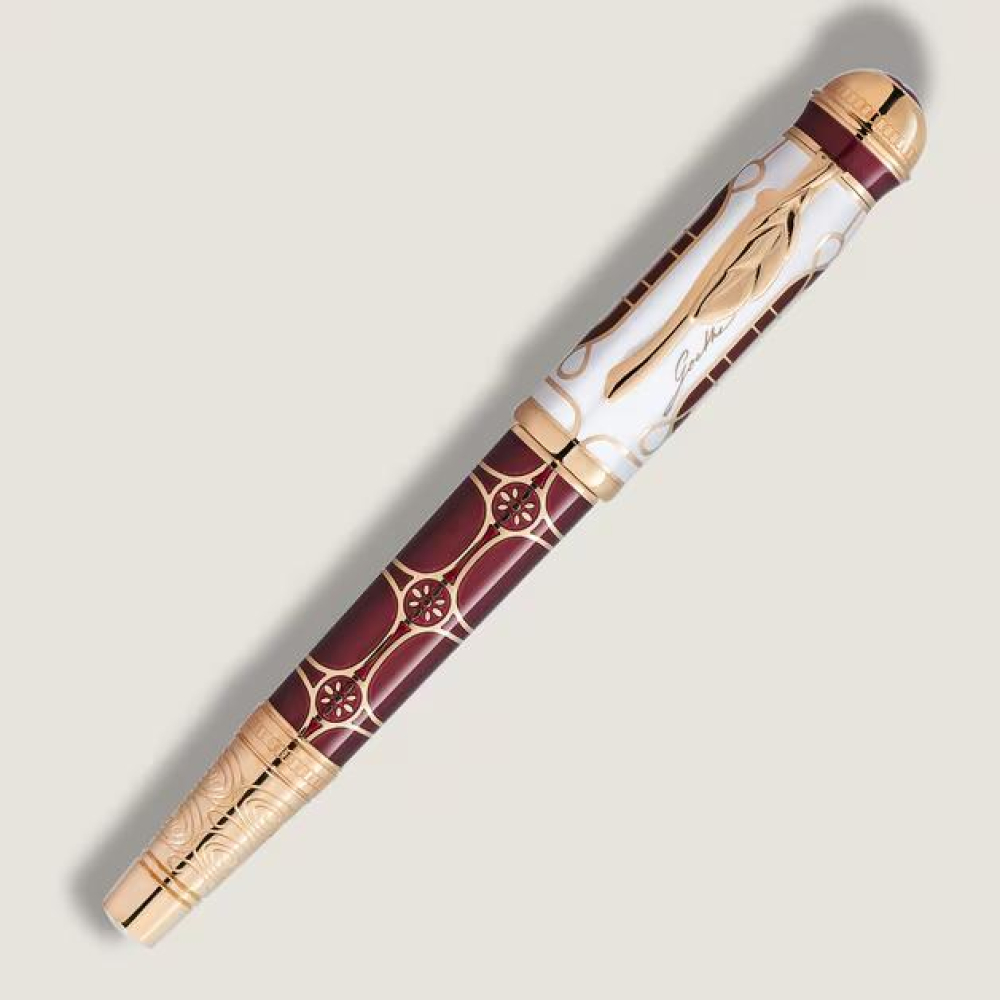
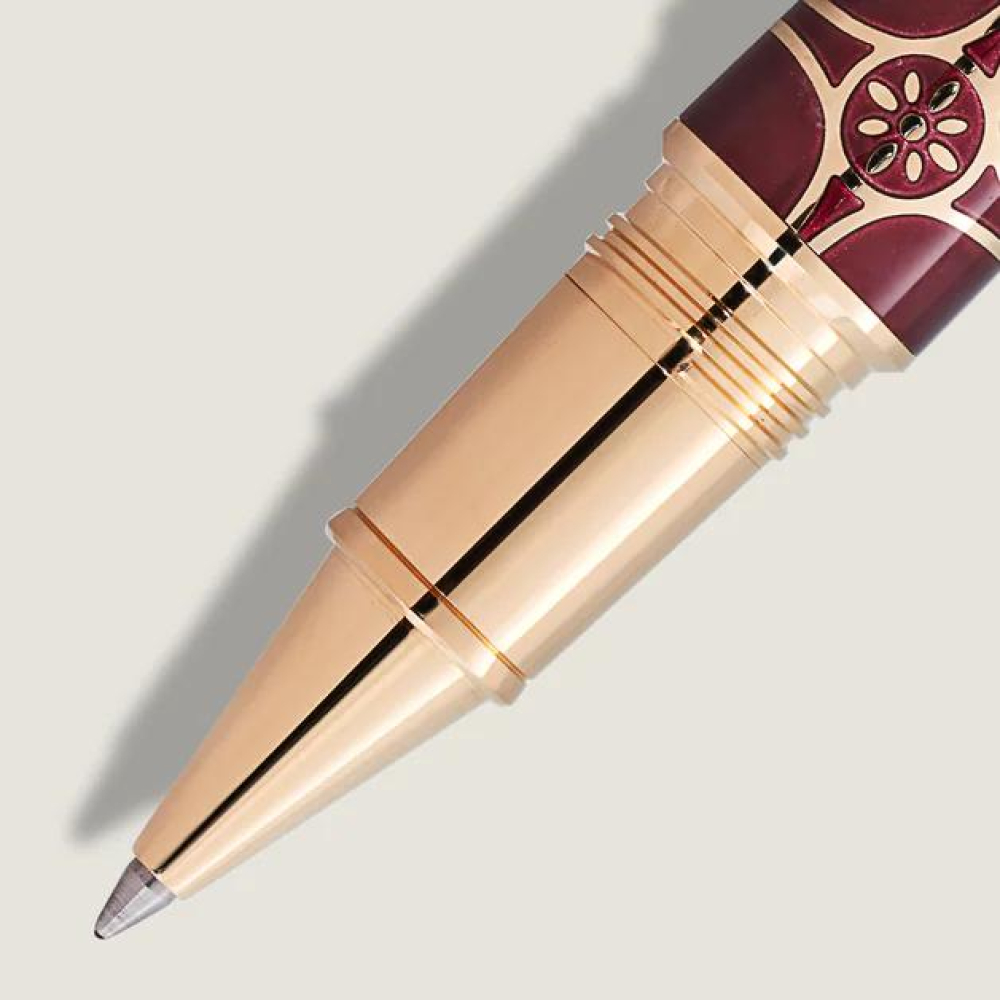
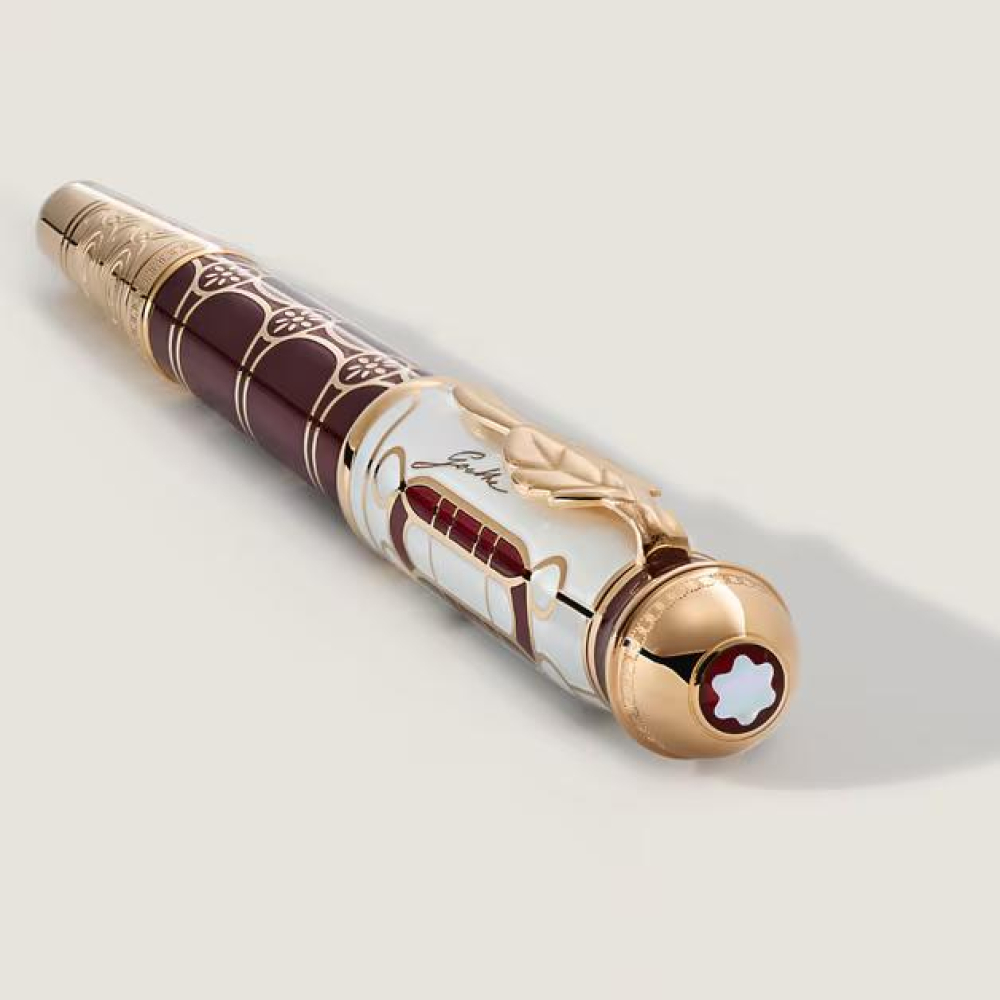
At the heart of the 18th-century intellectual awakening was a unique man whose written words have stood the test of time: Johann Wolfgang von Goethe. A multifaceted scholar, giant of German literature, lawyer, minister of state, theatre director, and an extraordinary collector and naturalist, Goethe was a revolutionary in every aspect, determined to push the boundaries of perception and learning. Driven by an insatiable thirst for knowledge, Goethe's creative versatility knew no bounds. The philosophical depth of Faust, the lyrical subtlety of his poetry, and the breadth of scientific inquiry behind his theory of color and botanical studies are of groundbreaking importance and testify to Goethe's genius in their diversity and far-reaching impact. As poet and statesman, advisor, friend, and lover, he left an indelible mark on the world around him and continues to inspire and inspire vision even today. With the support of the Klassik Stiftung Weimar and its Goethe National Museum, Montblanc is releasing the Authors Series Homage to Johann Wolfgang von Goethe Limited Edition 1808, dedicated to this universal genius Johann Wolfgang von Goethe, focusing particularly on his role as a statesman. Goethe shaped his era with his words and actions. The largest edition of his works and writings currently comprises 40 volumes containing approximately 3,000 poems. His drama Götz von Berlichingen was published anonymously in 1773, but just a year later, The Sorrows of Young Werther, written in less than four weeks, brought the 25-year-old lawyer overnight fame. His fame did not go unnoticed in Weimar, where the young duke Karl August was eager to transform his dukedom into a 'Palace of the Muses'. Goethe's move to Weimar was a turning point in his life. Here he was now seen not only as a renowned poet and philosopher, but also as a statesman and reformer; he revived the tradition of silver mining, reorganized economic and financial policy, and quickly became the duke's chief advisor. In recognition of his services to the Weimar court, Goethe received a noble title in 1782 and was awarded the Order of the White Falcon, also known as the Order of the Dynastic Guardians, in 1816. This star-shaped badge inspired the gold-plated ornamentation on the body of this limited-edition bottle. The dark red lacquer underneath alludes to the color of the ceremonial sash Goethe wore in Gerhard von Kügelgen's portrait. The gold pattern around the cap resembles the rounded arches prominently featured in a Rembrandt engraving adapted for the front page of Goethe's 1790 work, *Faust: A Fragment*. The figure of Faust occupied Goethe's almost entire life. Goethe wrote the first version of his work, Urfaust, followed by A Fragment, and finally, in 1808, his world-famous drama Faust I. Unparalleled in its eloquence and global significance, this drama is a true masterpiece of world literature. Goethe himself coined the term 'world literature,' using it as an expression of universality, transcending all linguistic, ethnic, and temporal barriers. As a symbol of Goethe's concept of 'world literature,' the cap takes the shape of a globe crowned with the Montblanc emblem. Resembling a historical chemist's glass jar, the slightly curved shape of the cap is an homage to Goethe's achievements as a scientist and collector. The leaf-shaped clip and engraved signature honor his extraordinary work in the field of morphology, and especially his proposal of an archetypal plant form. He even incorporated this idea into his didactic love poem, *The Metamorphosis of Plants*. These and all other thoughts and discoveries were put down on paper using precious writing instruments of the kind that inspired the historical appearance of the entire Authors' Edition. Unlike Goethe, whose works served to advance scientific inquiry, his fictional counterpart was plagued by doubts. Unable to achieve his academic goals, Faust instead turns to magic and invokes the 'Earth Spirit'. The dramatic scene, in which the light emanating from this overwhelming entity fills the room, is captured in one of Goethe's own sketches and is the model for the engraving on the tip of the cone. The other engravings around the cone are borrowed from the decorations on his appointment document as Special Embassy Counselor in Weimar. As a reference to the year of publication of Faust I, a landmark in German theatre and one of the most frequently translated and staged dramas in the world, this limited edition work is limited to only 1808 copies. As a nod to the year of publication of Faust I, a landmark in German theatre and one of the most frequently translated and staged dramas in the world, this limited-edition work comprises only 1808 copies. The other engravings around the cone are inspired by the decorations on his appointment document as Royal Embassy Counselor in Weimar.
International Brand Warranty
6 Installments with No Interest
Free Shipping
Special Secure and Insured Cargo
Orders placed by 4:00 PM on weekdays are shipped the same business day